Views: 124 Author: Site Editor Publish Time: 2026-08-26 Origin: Site
Chemical formulations require a delicate balance to perform successfully. You must manage product stability, flow properties, and mechanical strength simultaneously. Doing this without compromising the core formulation remains a major industry challenge. Without proper rheological additives, liquids often sag on vertical surfaces, dense pigments settle to the bottom, and dry powders clump together. Formulation engineers need reliable, high-performance materials to solve these exact issues.
This is where fumed Silica enters the picture. It serves as a global standard to solve complex viscosity, settling, and mechanical reinforcement challenges across numerous industries.
This article explores how these microscopic powders function within various liquid and dry systems. We will provide formulation engineers and procurement teams with a clear, objective framework. You will learn exactly how to evaluate, select, and safely implement the right material type for your specific industrial applications.
Fumed silica functions primarily as a universal thickening agent, rheology modifier, and anti-caking additive by forming microscopic 3D networks within liquids.
Choosing between untreated (**Hydrophilic Fumed Silica**) and treated (Hydrophobic) variants depends strictly on the polarity of the base system and moisture resistance requirements.
Fumed silica is often confused with precipitated silica or silica fume; however, its sub-micron particle size and distinct flame-pyrolysis manufacturing process give it superior rheological control.
Successful implementation requires specific high-shear dispersion equipment and strict handling protocols to mitigate dusting and achieve optimal viscosity.
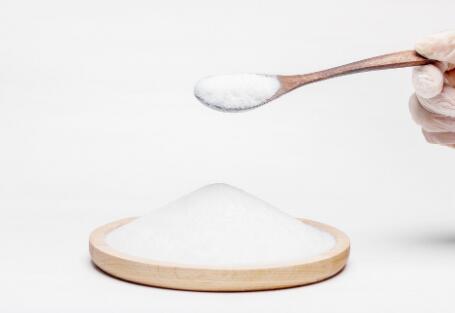
To understand how this additive transforms a formulation, you first need to understand its physical nature. Pyrogenic silica is an amorphous, microscopic powder. Manufacturers produce it via the continuous flame pyrolysis of silicon tetrachloride. They burn this precursor in a high-temperature hydrogen-oxygen flame. This intense thermal process yields ultra-fine, non-porous particles. These particles possess an exceptionally high surface area, making them highly reactive in liquid environments.
Dispersing this powder triggers a unique mechanical response known as the 3D network effect. Reactive silanol groups populate the surface of the particles. As you mix the powder into a liquid, hydrogen bonds form rapidly between adjacent particles. They create a reversible, three-dimensional lattice inside the fluid. This microscopic lattice traps the base liquid, restricting its natural movement and dramatically increasing viscosity.
You can measure this mechanism through specific, verifiable performance metrics. Formulation engineers typically look for two primary outcomes:
Shear-thinning (Thixotropy): The 3D lattice breaks apart when you apply physical force. Viscosity drops dramatically under shear. This allows you to spray or brush thick coatings easily. When the shear force stops, the hydrogen bonds quickly reform. Viscosity recovers almost instantly, which prevents the coating from sagging on vertical surfaces.
Anti-settling: The robust internal network acts as a physical barrier. It keeps dense pigments suspended indefinitely. It holds heavy fillers in place during extended shelf storage, preventing hard caking at the bottom of the container.
Formulators must select the correct surface chemistry before beginning any lab trials. Your choice depends heavily on the polarity of your base medium. Mixing the wrong grade into your formulation will result in complete rheological failure.
This is the standard, untreated form of the additive. Reactive hydroxyl groups completely cover its surface. It disperses easily into compatible liquids. Hydrophilic Fumed Silica shows excellent compatibility across non-polar to medium-polar solvent systems. Formulators often rely on it because it provides exceptional thickening efficiency at a relatively low procurement cost.
It works beautifully in standard solvent-based coatings. You can use it effectively in general-purpose adhesives. It is also the ideal choice for thickening unsaturated polyester resins used in composite manufacturing.
However, this untreated grade carries distinct limitations. It performs poorly in highly polar systems. If you add it to water-based coatings, water molecules aggressively compete for the hydrogen bonds. This prevents the particles from linking together. Consequently, the 3D network collapses. Furthermore, it lacks moisture resistance, making it unsuitable for sensitive electronic sealants.
Manufacturers create this variant through secondary chemical processing. They treat the raw powder using reactive silanes or siloxanes. This specialized treatment replaces the hydrophilic hydroxyl groups. Unreactive, water-repellent alkyl groups take their place.
This treated grade excels in complex environments. It is essential for epoxy resins and polyurethane adhesives. You absolutely need it for water-based systems and high-polarity solvents. It handles demanding applications requiring high water resistance and strict anti-corrosion properties.
You must view this choice through a practical cost-benefit lens. The surface treatment process increases the procurement cost. However, you cannot avoid this investment when formulating complex polar systems. Moisture-sensitive formulations demand its superior stability.
Characteristic | Hydrophilic Grade | Hydrophobic Grade |
|---|---|---|
Surface Chemistry | Hydroxyl groups (Untreated) | Alkyl groups (Silane/Siloxane treated) |
System Compatibility | Non-polar to medium-polar liquids | Highly polar liquids and water-based systems |
Moisture Resistance | Low (Absorbs ambient moisture) | High (Repels water) |
Typical Use Case | Unsaturated polyester resins | Epoxy and polyurethane adhesives |
Different industries leverage this versatile material to solve unique manufacturing and application problems. The targeted outcomes dictate how formulators integrate the additive.
Coatings and Paints:
Problem: Heavy pigments settle to the bottom of the can during storage. Wet paint often sags when applied to vertical walls.
Solution criteria: Formulators add the powder to achieve a precise thixotropic index. This controlled shear-thinning ensures an even coat weight during application. It also extends product shelf-life significantly by preventing hard pigment compaction.
Adhesives and Sealants (e.g., Silicones, Epoxies):
Problem: Operators need smooth extrudability from the cartridge. But the extruded material must resist slumping immediately after application.
Solution criteria: The additive provides crucial mechanical reinforcement. It improves the tear strength of the cured sealant. It allows you to pump high-viscosity materials smoothly without compromising the structural integrity of the applied bead.
Pharmaceuticals and Cosmetics:
Problem: Dry active ingredients show poor flow characteristics. They cake easily inside hoppers during processing.
Solution criteria: The material acts as a highly efficient free-flow agent. It functions as a glidant in high-speed tableting operations. It also serves as a transparent thickener in clear cosmetic gel formulations. You must ensure strict USP/EP compliance for these heavily regulated applications.
High-risk procurement confusion happens frequently in this industry. Similar-sounding materials cause costly manufacturing errors. You must understand the strict differences between these distinct chemical products.
Fumed vs. Precipitated Silica:
Manufacturers produce precipitated grades via a wet acidification process. This creates particles with larger internal pores and a much lower active surface area. It reinforces tire rubber exceptionally well. It also acts as a gentle abrasive in toothpaste formulations. It costs significantly less to procure.
In contrast, the thermal flame process creates fumed grades. They are entirely non-porous. They boast an ultra-high surface area. They offer superior rheology control and allow you to create completely clear formulations.
Fumed vs. Colloidal Silica:
Colloidal variants are liquid suspensions of stable particles. You use them primarily for precision chemical mechanical polishing (CMP) in semiconductor manufacturing. They also work well in specialized ceramic binder applications.
Conversely, you purchase the fumed variant as a dry, fluffy powder. You use it strictly as a rheological or reinforcement additive.
Fumed vs. Silica Fume (Microsilica):
This represents the most dangerous naming confusion. Silica fume is a dark, rough industrial byproduct of silicon metal production. The construction industry uses it as a bulk filler in high-strength concrete. The fumed variant is a pure, highly engineered chemical additive. They share similar names but perform entirely different functions. They are strictly not interchangeable.
Even if you select the correct material, poor implementation will ruin your formulation. The powder agglomerates easily during storage and transit. You cannot simply stir it into a liquid.
You must utilize specialized high-shear mixing equipment. Standard paddle mixers lack the necessary mechanical force. Rotor-stator mixers and three-roll mills work best for these applications. High shear rips apart the stubborn agglomerates. It reduces the powder back to its primary particle size. You must achieve this state to trigger full rheological activation.
However, you must watch out for over-dispersion risks. Do not mix the formulation for too long. Excessive shear forces carry serious consequences. If you shear the liquid too aggressively, you will permanently break the delicate internal structure of the primary aggregates. This ruins the thixotropy entirely, leaving you with a permanently thin liquid.
Finally, you must address strict handling and compliance protocols. The powder possesses an extremely low bulk density, often around 50 grams per liter. It floats easily into the air. You should implement rigorous dust mitigation strategies. Use local exhaust ventilation at all mixing stations. Automated vacuum feeding systems help prevent messy powder spills.
Take note of a critical safety distinction. This amorphous material does not cause silicosis. Crystalline dust causes that severe respiratory disease. However, inhaled amorphous dust still acts as a severe mechanical irritant. Therefore, wearing appropriate respiratory protection during compounding remains a standard, non-negotiable industry practice.
This high-performance additive remains an indispensable tool for achieving precise rheology, shelf stability, and mechanical reinforcement. Success ultimately depends on making objective technical choices. Formulators must carefully match the powder's surface polarity to the continuous phase of their liquid system.
To move forward effectively, follow these action-oriented steps:
Initiate technical evaluations early in your product development cycle.
Instruct your procurement team to request comprehensive technical data sheets (TDS) and safety data sheets (SDS) from qualified suppliers.
Order small sample quantities immediately. Run controlled bench tests to confirm the material's compatibility with your specific base resins.
Establish clear high-shear mixing parameters before scaling up to pilot production.
A: Typically 0.5% to 3.0% by weight, depending on the desired thixotropic index and the base resin. Bench testing is required to find the exact loading curve.
A: Water molecules compete for hydrogen bonds, preventing the silica from forming its 3D network. A hydrophobic grade is usually required for highly polar or aqueous systems.
A: Amorphous silica is chemically stable indefinitely, but hydrophilic grades readily absorb ambient moisture, which degrades their thickening efficiency. It must be stored in tightly sealed, moisture-proof conditions.